Tuesday, 4 February 2014

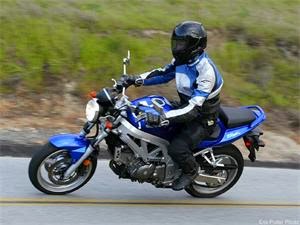
2004 Suzuki V-Strom 650


Despite having a face only a mother could love, Yoko Ono was able to score one of the late-'60s most desirable bachelors, Beatle John Lennon. Obviously, there was more to her than meets the offended eye.

And so it is with the new Suzuki DL650 V-Strom, a wonderfully competent bike that might be overlooked because of an appearance that might be diplomatically termed as "funky." So we ask you to overlook the superficial, as Lennon did, and give this piece a chance.

Emotions were mixed as I set off across the SoCal desert toward Indian Wells for the press introduction of the baby V-Strom. We were already converts to the sweetness of the SV650's 645cc 90-degree V-Twin, the powerplant loaned to the new DL, so we expected good things there. But, we wondered, how could this pseudo dirt bike possibly be as good a package as the SV, a perennial winner in the smile-per-mile category?

As we set off on a clear but cool desert morning, I wasn't the only one among the moto press to be grateful for the extra wind protection afforded by the effective fairing as we streaked down I-10 toward the east entrance to Joshua Tree National Park. New to the DL line in '04 (yes, the 1000, too) is a three-position windscreen. Airflow was directed just barely over the helmet on my 5'8" body with the screen in its center position. Taller riders were bothered by buffeting, but had their complaints addressed by moving the screen to its tallest position, a process that takes about five minutes and puts the screen in a more upright angle. At lower speeds, oncoming air gets deflected up and around a rider's helmet, resulting in faceshield-open riding becoming a viable option.


After a day in the saddle of the DL650 V-Strom, we came away gushing about it.
What was expected to be a miserable ride in the cold turned out to be entirely tolerable on the DL. Surrounded by a cocoon of fairly still air that almost makes ear plugs optional, the caffeine-addled mind could chill out and switch to other thoughts. Hey, did they pave the road overnight? This thing is smooth, both the willing engine between the legs and the supple suspension that seems to zap bumps from its path. With an additional 0.8-inch of travel up front and 0.3-inch extra out back, as compared to the SV, the DL soaked up uneven roads that would make a rider wince on most other mounts, aided by tall-profile semi-dual-purpose Bridgestones.

An indicated 80-mph cruise saw the tach spinning up at 5900 rpm, a reminder that Suzuki added three teeth to the DL's rear sprocket to give it the added snap necessary to compare with the 41-lb. lighter SV650S. Suzuki says the DL has about 5% more midrange power than the SV thanks to a smaller airbox, different cams and muffler, though they didn't mention how peak power was affected. The changes all seems to work well together and, despite the lower gearing, the V-Strom is able to top 125 mph with the speedo needle still rising... or so we heard.

In addition to the adjustable windscreen, the  V-Strom 650 brings along a new instrument panel to the DL line. Simple dual analog dials serve up easily assimilated speed and rev information, while a center LCD panel has the info desirable to the adventure-touring rider, such as dual tripmeters, a clock, and fuel and coolant temperature gauges. A healthy 5.8-gallon tank will take you 200 miles between fill-ups.

Joshua Tree, for those who haven't been there, isn't your typical National Park. Bizarre-looking rock formations sprouting out of the ground are as prevalent as the sparse vegetation, and the park road takes a meandering path through the arid desolation.


Despite its gangly appearance, the V-Strom can make quick work of the twisty bits.
In this environment, it becomes clearer that the DL is no SV. Less aggressive steering geometry and a tall 19-inch front wheel slows steering responses somewhat. Turn-in takes more muscle than the standard SV and, initially at least, the bike feels too tall to be a serious corner carver. But once acclimated, the DL proves to be fun to toss around, aided by the leverage offered by the tall and wide handlebar that puts a rider in a perfectly neutral riding position to enable tankful draining before needing a rest.

Ergos are nearly identical to the bigger DL, just about perfect for the V-Strom's mission, with wrists only taking a small amount of pressure. It's all-day comfy. The only change from the big DL is a different seat. At a reasonable 32.3 inches, the seat is 20mm lower and has diagonal cutaways at its side edges that allow shorter legs to have a straighter shot at the ground, giving newbs and the vertically challenged more confidence during low-speed maneuvering. Even so, the six-plus-footers on our trip reported there is ample legroom.

Although the DL650 isn't as nimble as the high and wide bars suggest, it can be hustled through twisties at a quick rate. It steers slower than the SV in part because of the tall front wheel/tire, but also because it shares the frame, fork, wheels and brakes with the 996cc DL. Still, the little  V-Strom is said to be 40 lbs. lighter, due mostly to the smaller engine and to a less robust swingarm.

The 43mm fork is outwardly identical to the big V-Strom, but it doesn't have the DL1000's more advanced cartridge internals. Laid at a 26-degree rake (26.5 for the 1000; 25.0 on the SV650), the Showa fork has provisions only for preload adjustment. Preload on the rear shock can be dialed in hydraulically with a handy knurled knob below the seat, just like a BMW; rebound damping is also adjustable.


Aboard the V-Strom 650, a rider's destination could be just about anywhere.
While the supple suspension does an admirable job of eliminating bumps, virtually making Botts Dots disappear, it does show its price-point limits with its harshness when hitting sharp bumps. Scrubbing speed over small, repetitive bumps induce a chatter condition, and the soft fork springs allow a fair bit of front-end dive when braking.

But if you wanted a GSX-R, or an SV for that matter, you wouldn't be considering a DL. Not only is the V-Strom way more comfortable, but it also has the capability to take you places where the others would fear to tread. Although Suzuki says the V-Strom isn't really meant to go off road, we couldn't resist testing its capabilities and that of its Trail Wing 'Stones.

With a 417-lb. claimed dry weight and road-biased rubber, the 650 isn't gonna win many enduros, but it actually takes to loose conditions fairly well. Venturing off the beaten path and into a couple of unpaved campground areas proved the V-Strom can be slid and tossed around in ways that would make a Ducati 999 rider spill his bladder inside his Daineses. A bountiful 40 degrees of steering lock lets the DL maneuver in tight spaces, whether piloting a course around a boulder or an Escalade. Later on we were forced to ride several miles on a gravel road that was under construction, and here the relaxed fork angle and a fairly generous 110mm of trail kept the Swiss Army Bike on its intended path even if the feedback from the soft surface indicated otherwise.

Taking the SV650's sweet V-Twin and tucking it into the DL1000's frame proves to be a good concoction.

Aiding the V-Strom's low-traction performance is its ultra-smooth throttle take-up, with none of the abruptness endemic to many injected bikes. Suzuki's Dual Throttle Valve (SDTV) uses a computer to control the throttle body's upper butterfly in relation to engine speed and throttle position, giving just the responses a rider expects. Also helping the DL mete out power is a heavier starter clutch that adds weight to the engine's rotational mass. The V-Twin engine, as all 90-degree Twins, has perfect primary balance, although a DL rider can feel a hint of secondary vibes at 6000 rpm. Otherwise, this engine is super-smooth, even more so than its big brother.

The V-Twin, like in the SV, is a real gem, but adrenaline-hungry pilots might become bored with it. There is no real hit in its powerband, meaning there's power whenever it needs to be summoned, which is good. But step off an SV and onto a DL, and you'll notice a less enthusiastic rush to the 10,500-rpm redline. On the plus side, Suzuki has once again done a magnificent job with a gearbox, with smooth but positive cog swapping and easily accomplished downshifts. We liked the high-mount muffler that tucks in nicely, though we were less impressed with the flaccid exhaust note for a V-Twin (although easily preferable to Yoko's singing). California bikes receive a catalyzer to reduce emissions, and that attractive, aluminum-looking exhaust shield is actually plastic.

An adjustable brake lever lets even small hands get good purchase to aid the 2-piston, pin-slide calipers and 310mm front rotors in hauling the DL down from speed, they are not supersport-spec, but they are plenty powerful for the V-Strom's mission. Out back, a single piston caliper bites on a large 260mm disc, but it feels numb and weak. If the brakes didn't get you slowed in time, the effective rear-view mirrors will offer a good view of the Highway Patrol coming up behind you.


The black V-Strom looks like it was plucked from the set of Road Warrior.
Suzuki's concept for the DL line was to create a "Sport Enduro Tourer," and the V-Strom 650 gets top marks for living up to the monicker. In combining the SV650 motor with the DL1000 chassis, Suzuki has built its parts bin special into a bike that defines a new market segment.

It has the power and smoothness to dust a BMW F650, and it offers more comfort and wind protection than the SV650/S, Honda 599 and Triumph Speed Four. Its closest competitor is likely Yamaha's buzzier but faster FZ6, which shares a similar riding position, fairing coverage and price tag. The FZ is definitely faster in a straight line, but its R6-based engine isn't as adept as the smooth and torquey DL's Twin. And with its standard luggage rack and optional hard luggage, the V-Strom is much more the SUV as opposed to the FZ's sports coupe. In a way, the DL650 is the Honda VFR of the adventure-touring segment, offering versatility, a sporting nature and Lexus smoothness.

As the day's light faded into the horizon on the way back to the hotel and the subtly attractive orange glow of the instruments matched the color of the setting sun, it was hard to imagine another machine with a competitive versatility-per-dollar ratio. At $6599 in blue or black, the new  V-Strom is sure to attract the type of guys who prefer smart and loving, if a bit homely, women over more attractive but temperamental ones.

You can't tell what the DL looks like from on top, and perhaps John felt the same about Yoko.


Share your thoughts on the '04 Suzuki V-Strom in the MCUSA Forum.

2004 Suzuki SV650 Comparison


On the street, the SV's motor is a gem. As is typical for a longer stroke motor like a V-Twin, especially one with a 46cc displacement advantage, it cranks out better power down low than the Multis, even if its top-end numbers (72.2 horsepower at 9200 rpm) pale in comparison. What this means, plain and simple, is that the SV makes the most ponies and most torque anytime the revs are below 9000 rpm. How much time do you spend revving your streetbike above 10 grand, anyway?

Well, for those raised riding inline-Fours, like our guest tester Heidi Mattison, riding the V-Twin Suzuki for the first time was a new version of reality.

"Having zero experience on a Twin of any kind, I redlined the bike a half a dozen times my first time out," said the CBR600F4i racer. "I became very disappointed with the power above nine grand because I expected it to be there. I decided I would never own an SV and never recommend an SV. After some probing from the other guys on the trip (her words, Ed), I decided to give it another shot. It took some time getting used to the power at such a low rpm as I began to short-shift the bike, but my comfort level eventually came around. I was amazed at how much power was there by bogging it through the tight turns and dirty pavement."

Unlike the SV, Heidi quickly made friends with the Triumph Speed Four. That's not surprising when you consider the TT600 upon which the Speed Four is based feels a lot like a CBR600F4, and she rides an F4i. Gabe, the other F4i owner in our group, also took a liking to the Speed Cubed.

"It's almost as fast as my F4i, but the motor doesn't have the same top-end rush that the Honda does," says the bike distributor/salesman/journalist/lawyer. "Otherwise the two bikes feel similar in weight, handling and engine performance."


The Suzuki's V-Twin sprints out of the gate with the most power at low rpm before being overtaken once the four-cylinders get spooled up. Note the how the Triumph falls off the pipe from 8500-10,000 rpm, the only flaw in its enjoyable powerband. Click on the image to get full size dyno results.

Although sport-touring isn't in the Speed Four's list of top priorities, the Brit bike actually does quite well on the freeway. Its body-colored plastic prow over the headlights does a surprisingly respectable job at deflecting air, and it was made at least 50% more effective with the addition of a tinted Laminar Lip. This clever device helps to funnel air further upward to provide a larger cocoon of protection, and at just $75, it is a solid investment in rider comfort. Look for a product test in the coming months.

Our riders had praise for the S4's nicely padded, supportive and roomy seat, and according to Gabe, "the pegs are just where I would put them if it were left to me." But Gabriel raised a bit of Cain when the topic of handlebars came up. "The clip-ons make no sense on this hooligan-y kind of bike. Triumph doesn't offer a handlebar kit, either."

With the most oversquare engine architecture of the Fours, the Triumph has about as much of a chance of winning a tractor-pull event as the Yamaha. There is nobody in the engine room below 3000 rpm, necessitating some clutch slipping leaving stoplights, and a minor hole in its powerband makes roll-on acceleration a bit flaccid depending on the speed and gear. Still, its 85.3 horsepower is right in the hunt, and its quarter-mile run was just a click behind the quickest of the pack, an 11.47 to the top-dog FZ6's 11.37.

There's about a jillion corners to be found between LA to Monterey, and we tried to hit them all during our meandering journey. In this kind of snaking environment there's no way something nicknamed the Couch could ever hope to keep up with a Speed Four, the nastiest bike in this group by a wide margin. In the twisty bits, the S4's track-worthy chassis and premium suspension components set it apart.

"The thing just hammers through high-speed turns without wallowing or moving on bumps," says Gabe, an experienced road racer. "The shock is able to keep the wheel on the ground even at insane speeds on very bumpy, twisty roads. And t he Four's ability on bumpy, slow roads surprised me."

2007 Suzuki V-Strom Comparison


After our Oregon tour was complete, these bikes paired off on the drag strip for some performance testing. With the same rider on board, the V-Strom and BMW posted similar times in both the eighth- and quarter-mile times. The Ducati and Triumph, the lightest of the group, were the fastest and also closed out with similar score cards. With its water-cooled Inline-Triple it wasn't too hard to figure out that the Tiger would likely use its power advantage here at the strip. Not only was it the sole bike to break into the 11-second bracket (11.67 @ 113.48 mph), but it was also the only machine to pump out more than 100 ponies on our Dynojet 200i dyno. Nearly 104 HP was 14 more than the next-closest V-Strom (103.7 vs. 89.5) - that's more than 15% of the Suzook's total power and it felt every bit of that on the street or the strip. Suzuki wins the undercard war of the Twins with the GS in third and Ducati bringing up the rear at 86 and 81 HP, respectively.

The V-Strom's 90-degree V-Twin is the only liquid-cooled two-cylinder and though it doesn't win either the horsepower or torque categories on the dyno, the comfy Japanese bike is deceptively fast, easy to ride and confidence-inspiring.

"The power was there whenever I needed it," says Ramos. "Passing or powering up a steep gravel hill at an unexpected shortcut, the engine was eager to please. The lay-on of power was smooth and even, just right for rolling on and off the throttle through the corners."

The Tiger is categorized by Triumph as one of its Urban Sports machines, but considering that the British marque doesn't have a dual-sport or adventure-touring category, we let the technicality slide and included it anyway.

"Head for a bit of fun at strange angles," suggests Triumph's website "Tucked into a brilliantly balanced chassis, the Tiger's potent engine delivers power and ear to ear grins."

Well, we took the advice and ran with it because this little blurb isn't some half-truth cooked up by Triumph's spin-doctor marketing department - it's dead on. The 1050cc Inline-Triple flat gets with it, and the chassis and suspension play the supporting roles. A trio of cylinders bored and stroked to 79 x 71.4mm squishes fuel with a 12:1 compression ratio. That may sound all fine and dandy, but perhaps to put it in better perspective, it's the same engine that powers the immodest Speed Triple streetfighter and the spirited-yet-companionable Sprint ST sport-touring machine.


The Beemer's 1170cc Twin puts out power that is extremely usable across the board. You won't win too many outright drag races, but like the rest of the bike, the motor fits perfectly for what this machine is designed to do.
"The Triple likes to rock-and-roll," says Ramos. "It can be a little spiky when you jump on it and, as you would expect from this engine, it likes the higher rpm. The delivery of power was predictable and most definitely there when you called on it."

Haldane echoed his sentiments. "What else can I say but 'wow.' If you are looking for an adventure-touring bike with more than enough power on tap and a distinct sound, this is the bike for you. One twist of the throttle and the revs from this Triple will get you wherever you're going real fast."

Though not the fastest machine or most-violent accelerator, the BMW's Boxer Twin was actually one of the most usable in the group. With 71 lb-ft of torque on tap, the opposing cylinders dish out plenty of grunt to get the hefty machine up to speed. We did some unofficial moving drag races from 50-80 mph with the bikes in third gear, and the Beemer definitely didn't wax the entire group. The Ducati and hi-po Triumph were challenging for that title, but the GS showed that it can easily hustle its way around a slow-moving tractor-trailer rig. The word that comes to mind with the BMW motor, and in fact the entire machine, is "easy." Getting the jump off a green light, passing slower vehicles and cruising upwards of 80 mph require roughly the same amount of mental effort - none. The bike is willing, smooth and ultimately very good at propelling the GS at virtually any speed you would require.

There are multiple bridges that span the majestic Columbia River, but the steel grated one that we chose was not our favorite moment of the trip. However, cruising the gorge was well worth it.

Now that we were aware of the twisty, and less traveled, way out of Washougal MX Park we headed back to Hwy 14 and out towards Mosier Loop. The Loop is an 80-mile ride west of the city of The Dalles that has been used for testing and photography for Yamaha's FZ-6 and Mercedes' SLK sports model according to Lavine's pal Tom Mehren, author of The Sound Rider! guide to Motorcycling in the Columbia River Gorge .

AMA Motocross action might not have the same adrenaline excreting effect on the rest of our group, but as the moto guys power-washed the last flecks of Washougal mud from their roaring machines, I was ready to get back on those two-wheelers of ours and find some doubles, somewhere out there in the boondocks. Fortunately, our daily plan had one last stop that we needed to make before heading to our evening accommodations.

We tooled back along the northern side of the Columbia River Gorge to one of the most important economic fixtures in the Northwest - the Bonneville Dam. After drinking our visual fill of the Northwest's largest hydro-power-producing structure that utilizes two powerhouses and 18 generators to produce roughly 1,00,000 kilowatts of power for Portland, we continued East past the river's third-oldest bridge known as the Bridge of the Gods at the Cascade Locks. A brief glimpse was all we had time for as our stomachs continually reminded us of a dinner appointment, scheduled with another of our good buddies a ways up the road in Hood River, OR. One last obstacle, a steel-grated bridge stood in our way as we crawled back to the Oregon side of the waterway and into Ameri ca's wind-surfing Mecca.

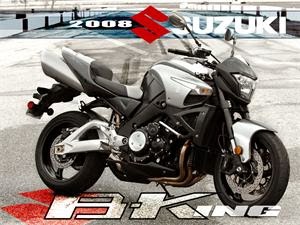
2008 Suzuki B-King Bike Test

Engine:
1340cc Inline-Four, DOHC, 16-valves
Bore x Stroke:
81 x 65mm

Compression Ratio:
12.5:1
Horsepower:
159.4 hp @ 9200 rpm
Torque:
96.5 lb-ft @ 7300 rpm
Weight:
578 lbs w/ fuel
Quarter Mile Time:
10.23 sec. @ 138.2 mph
Power to Weight Ratio:
0.28 hp per lbs
Wheelbase:
60.0 in
Rake:
25.5 deg
Trail:
4.2 in.
Seat Height:
31.7 in.
Fuel Tank Size:
4.4 gal
Average MPG:
30.2
MSRP:
$12,899 ($13,499 w/ ABS)
It's big, it's intimidating and it turns about as many heads as an NBA player at Grandma's Bingo night. Now, we're not talking about an oversized jewelry-clad basketball player; we're talking about Suzuki's B-King. Originally debuted seven years ago at the Tokyo Motor Show, the B-King is one ultra-cool streetfighter prototype that actually made it into production.

The B-King is proof of Suzuki's unequivocal embrace of America's 'bigger is better' mantra. It is the largest, most powerful muscle bike ever manufactured, period. With this one it's hard to find anything that isn't big: big power, big brakes, big proportions and big weight.

I can't help but feel just a little bit intimidated as I gaze at its bulging body pieces and huge twin underseat exhaust canisters protruding like trapezoidal double-barrel artillery guns. Twin ram-air intakes large enough to inhale witless birds sit underneath the fashionably integrated front turn signals. Stylized pieces like the chrome bezel on the top of the fuel tank, sculpted brake and clutch master cylinders and the refined-looking instrument package give the Suzuki a high-end, premium feel. Equally impressive is the high level of overall fit and finish. Unsightly fasteners are kept to a minimum and the body components fit together as if they were crafted out of one complete piece.

Once in the saddle, there's no hiding its 578-lb mass (fully fueled, ready to ride). Due to the substantial width of the gas tank your legs are spread far apart, so riders with minimal dexterity better bring their A-game when riding the B-King. But things get better as soon as you reach out to the widely-spaced tubular handlebars. The relaxed, upright riding position and tallish bars make it a very comfortable machine. However, the high mounted foot pegs force the rider's legs into a more aggressive bend than seems necessary.

Thumb the starter and the gigantic 1340cc liquid-cooled Inline-Four comes to life emitting a quiet, sewing machine-like purr. 'Man, how much better would this thing sound with some pipes' I think to myself. The engine is almost a complete carbon copy of the one used in the new '08 Hayabusa, except for a smaller airbox and a different 4-2-1-2 exhaust system that still uses Suzuki's exhaust tuning valve (SET) inside. Pump the hydraulic-actuated clutch a few times before you drop it into gear and notice its light feel, followed by a progressive engagement. Twist the throttle and it feels as you're piloting an F-18 being flung off the end of an aircraft carrier. Wide-open acceleration from a dead stop is that intense.


Not quite the hulking monster of its Hayabusa cousin, the B-King's 1340cc Four cranks out almost 160 horsepower and 96.5 lb-ft of torque.
Yet the B-King is as obedient or as wild as your right wrist commands. Feel like stunting in front of your friends? Just hammer the throttle in the first two gears and you'll look like your neighborhood's most-wanted villain. Feel like keeping the peace? Keep the revs low and ride the B-King's smooth wave of 70-plus lb-ft of twist from just 3000 rpm. Power delivery is flawless throughout the 11,000 rpm rev range and is complemented by the precise throttle response afforded by Suzuki's Dual Throttle Valve (SDTV) fuel-injection system. The B-King is also outfitted with Suzuki's proprietary drive mode selector (S-DMS) which allows the rider to modify power output by choosing from one of two modes. By default the bike is in full-power 'A' mode, but all it takes is a simple push of a button mounted on top of the gas tank, (while the bike is at a stand-still, in neutral) and the rider can select 'B' mode which dramatically mellows its power delivery. The system works well and can allow a rider of less experience to have a more controllable ride. For those of us thrill junkies though, 'A' mode is all you'll ever use.

Power is transmitted to the gold-colored chain final drive via a six-speed transmission that utilizes a back-torque limiting clutch. Shifting action wasn't as smooth as other Suzuki's we've tested recently, but nonetheless engagement was precise. We never encountered any mis-shifts despite repeated full-throttle acceleration antics. Gearing is versatile for the streets, with a short first cog allowing for easy drag races, er, I mean launches from a stoplight. Yet, thankfully, top gear is tall enough for a low-rpm, buzz-free ride at freeway speeds.

But the lack of a front fairing or windscreen can impede triple-digit fun as above 120-mph it feels like the wind is trying to peel you off the bike. Suzuki realized that this might be a hitch in the equation.

Instrumentation is easy to see at a glance and consists of a swept analog tachometer flanked by a digital speedo, gear position indicator, and a multitude of warning and indicator lights. There's also a bar-style fuel gauge, coolant temperature as well as odometer, dual trip meters and clock inside of the tach. The  B-King also has a cool miles until maintenance required countdown meter, so you'll always know when it's time for service.


A larger than life streetbike with more power and performance then necessary, the mighty B-King is tailor made for the American marketplace.
With just shy of 160 horsepower at your disposal, you'd hope that the engineers would have endowed the B-King with a chassis stout enough to handle all that muscle. And we're pleased to report that they have. A clean looking twin-spar cast aluminum frame and matching three-piece cast aluminum swingarm is paired to a fully adjustable (preload, compression, and rebound) KYB 43mm inverted fork and equally adjustable rear shock. Suzuki claims that suspension damping characteristics are similar to that of their GSX-R sportbike line and after repeated "cloverleaf exploring" on the seemingly infinite freeway interchanges Southern California has, we're believers.

While cornering, suspension feels both firm and responsive with plenty of ground clearance, yet cruising down a pothole-laden L.A. street reveals a far plusher ride than that of a GSX-R sportbike. Despite the suspension's full range of adjustability, we didn't feel the need to change the settings as the stock setup is a good compromise between cruising the block and spirited canyon blasts.

Contrary to what your eyeballs tell your brain, the B-King is rather nimble in most situations. Sure it's not as flickable as a 1000cc sportbike, but it still maintains a reasonable degree of maneuverability considering its 5-foot wheelbase. It readily changes direction with just a light tug of the wide bars and once a turn has been initiated, subtle line changes can be made without drama. Simply look where you want the bike to go and it's there. Also impressive is its stability at any speed. No matter how hard we tried we couldn't get the front end to wiggle around or get out of shape. However, at slower speeds-especially in parking lots, there's no masking the B-King's girth. That, coupled with its non-adjustable steering damper, can make it rather cumbersome when you're crawling around.

Stopping is achieved via a pair of radial-mount Nissin front brake calipers that grab onto 310mm diameter rotors. A radial-pump brake master cylinder pushes brake fluid through rubber lines and there isn't a hint of fade, even during extra aggressive, repeated use. Considering that the brakes are stopping almost 600 lbs, there is a good amount of power and plenty of feel at the end of the adjustable brake lever. Out back a 260mm disc and single piston caliper helps keep control while you're riding around on the fat back tire. ABS is also available for $600 to help ensure stability during braking regardless of road or weather conditions.


Beefy braking components complement a high-performance package that B-King owners will enjoy whether they're a hard-core stunter or a weekend canyon warrior.
The B-King rolls on a set of 3.5 x 17 inch front and wide 6 x 17 inch rear three spoke aluminum wheels shod in Dunlop's Sportmax Qualifier rubber (120/70R17 front, 200/50R17 rear). We've always been a fan of the Qualifier's due to their mild steering manners, quick warm-up times and gum-on-shoe levels of adhesion, but the B-King's OE rear tire lacked the same amount of outright grip that we've become accustomed to with the Qualifier. Maybe it's the extra weight or the immense amount of power that the 200mm wide tire has to deal with, but it's possible to spin up the rear tire on command during hard corner exit. Fortunately the tire has great feel so when it does spin it doesn't catch you off guard.

At the end of the day, the B-King really surprised us. It's a big, burly streetfighter that for the right rider could be the total package. It's got a fresh, futuristic look like nothing else on the street backed up with a powerful yet refined powerplant mated to a chassis that is both composed and agile. And while it may not ever fit in with Grandma and her crew, the B-King has us shouting BINGO!

Sunday, 2 February 2014

2009 Suzuki Gladius Comparison

Engine: Liquid-cooled 645cc V-Twin; 8-valve
Bore and Stroke: 81.0 x 62.6mm
Compression Ratio: 11.5:1
Fuel Delivery: Fuel-injection
Horsepower: 67.12 @ 9000 rpm
Torque: 42.9 lb-ft @ 7400 rpm
Clutch: Wet; cable-actuated
Transmission: 6-speed
Frame: Steel
Front Suspension: 41mm preload-adjustable Showa fork; 4.9 in. travel
Rear Suspension: Showa hydraulic rear shock with adjustable preload; 5.1 in. travel
Front Brakes: 290mm discs with Tokico twin-piston calipers
Rear Brake: 240mm disc with single piston caliper
Tires: Dunlop Sportmax Qualifer 120/70-17, 160/60-17
Curb Weight: 447 lbs.
Wheelbase: 56.9 in.
Length: 83.9 in.
Rake: 25 deg. Trail: 5.1 in.
Seat Height: 30.9 in.
Fuel Capacity: 3.8 gallons MPG: 44
MSRP: $6899
Colors: Blue/White; Black
Warranty: One year, unlimited mileage

Before riding the Gladius, we were pretty pessimistic of how fun this little Suzuki motorcycle could be. But after just one ride on it, we were blown away by how amusing it is to ride.

Jump into its cockpit and there’s no disputing the Gladius feels wider than the ultra-narrow ER. Reach out to its chrome handlebars, however, and you’ll be impressed with its wide traditional bend which lends itself well when you need to maneuver the motorcycle in the tight confines of a parking lot. Like the ER, the front brake lever has a good deal of adjustment for hand size and the clutch lever is light and offers gentle engagement. Although the Gladius’ 30.9-inch seat height is taller than the ER’s, it still allowed the 5’7” Atlas to plant both feet firmly on the ground. We also liked how the seat is shaped to perfectly fit your bottom.

Press the starter button and the Gladius engine chugs to life with an air gulping intake sound, as compared to the ER’s beefy exhaust blare. Accelerating hard from a stop and you’ll be taken back by how peppy the Gladius 645cc V-Twin feels. Although on paper it actually has slightly less peak torque, it feels more lively and responsive than the numbers lead you to believe. Keep on revving the engine past 7000 rpm and you really feel the Gladius accelerate. Here you’ll feel its horsepower advantage over the ER, yet its power delivery is completely seamless which won’t intimidate a novice rider.

Working through the Suzuki’s six-speed transmission was also pleasing and it felt more polished than the ER’s, changing gears with the precision and feel we’ve come to expect from Suzuki’s GSX-R line of sportbikes.

Without a doubt the Gladius is a very well balanced motorcycle and has plenty of power to get on one wheel, check out all the action in our Suzuki Gladius Video as it takes on the Kawasaki ER-6n.
“I love the sensation you get from the Gladius’ engine. It just feels quicker than the Kawi’s pretty much everywhere. It’s super smooth through the rev range and doesn’t have any power hit like the ER. Plus you don’t have to rev it to the moon to get it to accelerate fast,” mentions Atlas.

While the Suzuki’s chassis isn’t quite as agile as the ER’s, it’s still is a blast to ride when the road gets curvy. However its lack of ground clearance gets annoying. Add in a really soft suspension and it feels like the Suzuki is missing a something charging through the corners.

“Next to the Gladius’ paper thin seat, the thing I don’t like about it is its lack of ground clearance. I mean they put good sticky tires on it and you lean it over and it immediately starts scrapping. Then the bike stars wiggling around because the suspension is so soft. If they fixed those things this could be almost a perfect little motorcycle,” says Atlas.
Suzuki wisely chose to fit the Gladius with the ultra sticky Dunlop Sportmax Qualifier tire. And if we had to choose between it and the Roadsmart we’d always go with the Qualifer because we like the way it feels. However, that feel does come at a cost: Mileage service life.


While the Gladius suspension wasn’t as taut as the ER, it definitely is much more forgiving on rough road. Where the ER’s rear-end feels downright harsh the Gladius set-up sorts out pavement imperfections effortlessly. However, its thin seat works against the more complaint rear suspension and compromises ride quality so much that the ER gets the nod for those planning on logging extended seat time.

Out on the highway the Gladius’ engine delivers more vibrations through its control surfaces. While it never gets annoying it’s not quite as smooth as the ER. We did appreciate its more open cockpit though especially within the leg region, which allowed for a sporty seating command without compromising overall comfort.

Equally as pleasing was the Gladius’ simple yet well thought out instrumentation. In fact, come to think, of all the streetbikes we’ve tested recently the Gladius might have the most functional, most legible instruments of any new motorcycle. A large analog tachometer is flanked by an orange backlit digital speedometer complete with a gear position indicator and dual trip meters and clock.

Braking performance is another department exceeding expectations. Up front 290mm brake discs and double-piston Tokico calipers require only one finger at the brake lever. A single 240mm rear disc and single-piston caliper keep you from looping out when you’re riding down the road on the rear wheel. Feel on both ends was plentiful, however, we could see how novice ham-fisted riders might think the Suzuki’s brakes are a bit touchy.

While the Gladius netted slightly better fuel economy than the ER (44 MPG versus the ER’s 42) it wasn’t enough to offset the ER’s 0.3 gallon-larger fuel tank. Which gives the ER slightly more range then the Gladius.


One of the few kinks in the Gladius armor is its lack of ground clearance at speed.
Visually, the Gladius design is a mixed bag. Although we dig its Blue/White paint scheme and stylized exhaust system, its shape is, perhaps, too out there. It also didn’t draw near the amount of attention as the ER, which might be a boon for the rider who likes to fly under the attention radar.

Where the ER-6n feels utilitarian to ride, the Gladius is dynamic - offering a much more intimate riding experience than expected from its $6899 pricetag. It does everything a motorcycle is supposed to do: It’s easy-to-ride, performs admirably in all but the most extreme conditions and is just plain fun on the road, regardless of engine size. That’s why the  Suzuki Gladius is the sporty new entry-level motorcycle you’ve been looking for.


For My Money

Adam Waheed, Road Test Editor, 6 foot, 180 lbs:

Honestly, both of these motorcycles would be perfect for a new rider as beyond anything else they are small and easy to ride. But the thing I really like about the Suzuki is that although it’s designed for a newbie, it’s still so well engineered that an experienced rider can hop on it, rip around and come back with as big as a smile on their face as if they just got a GSX-R sportbike. It’s truly amazing how much fun Suzuki infused in this motorcycle. If I was in the market for a new small displacement sporty motorcycle the Gladius would be it.


Steve Atlas, Executive Editor, 5 foot, 8 inches, 150 lbs:

The ER-6n is a funny motorcycle. It is definitely more oriented to someone who is new to the sport of motorcycling. Not to say that the Gladius isn’t, but the Kawi just feels a tad bit smaller, a little more agile, more docile power, etc. When I picked up the Gladius I told Suzuki’s press officer, Garrett Kai, that if I could leave the store and, right off the bat, having never ridden the machine, wheelie the Gladius for the several blocks to the stoplight at the end of the road without putting the front end down, I would give it a good review. And the Suzuki did just that and more. I’ll take a new Gladius please.

2009 Suzuki TU250X First Ride

Engine: 249cc Air-cooled Single, 2-valve SOHC
Bore x Stroke: 72.0 x 61.2mm
Fueling: Fuel-injection
Ignition: Digital
Transmission: 5-speed, chain final drive 
Clutch: Cable-actuated, wet
Front Suspension: 37mm Showa telescopic fork
Rear Suspension: Dual Showa coil-spring hydraulic shock absorbers
Frame: Steel
Front Brake: 275mm disc with twin-piston Tokico caliper
Rear Brake: Drum
Front Tire: Cheng Shin 90/90-18
Rear Tire: Cheng Shin 110/90-18
Rake/Trail: 25.5-degrees/3.60 in.
Wheelbase: 54.1 in.
Length: 81.5 in.
Seat Height: 30.3 in.
Curb Weight: 328 lbs.
Fuel Capacity: 3.2 gal.
Available Colors: Red
Warranty: One year, unlimited miles
MSRP $3799 

When Suzuki set out to build the TU250X, the following were its guidelines: Blend retro styling and simplicity alongside modern reliability and ease-of-use in an entry-level motorcycle for the bargain-basement asking price of $3799. With the TU you get a stylish, economical little bike that’s easy-to-ride and perfect for jetting around town.
Small and simple, visually the TU is a stunning piece of machinery. We adore its classic ‘70s era scrambler styling cues, including the oversized chrome headlight, rear shock absorbers, chrome wire wheels, exhaust, and chromed chain guard. Additional eye-candy comes in the form of its shapely burgundy-colored body panels and two-tone and pinstriped fuel tank. We also appreciated the silver paint on the chassis and polished-glow of the engine.
Powering this 328-lb featherweight is an environmentally friendly and fuel-sipping air-cooled 249cc 4-stroke Single. The engine is fuel-injected and inhales gas from a generously-sized 3.2-gallon fuel tank. This gives it a range of nearly 200 miles based on its observed 58 MPG fuel mileage.
The fuel-injection system does away with any choke or fast idle lever which makes starting the motorcycle as simple as a push of the black starter button, regardless of the temperature outside. A 5-speed transmission shifts power back to the rear Cheng Shin rear tire via chain final drive, augmented by a cable-actuated clutch.
(Above) A large headlight provides above average road illumination at night. (Middle) Instrumentation is both simple and effective. (Below) The swept muffler does a admirable job of muting excessive engine noise.
First gear is really low and allows the bike to chug away from a stop with barely any throttle input—a boon for those just learning how to ride a motorcycle. The other four gears are well spaced and help optimize the engine’s mild torque curve.
From a stoplight, the engine delivers adequate acceleration force for you to getaway quickly from a stop, plus its 78 mph top speed allows it to run down the interstate safely. However, as engine rpms increase, so does the amount of vibration through the controls. At low speeds it’s not that bad but when you’re cruising in top gear at any speed above 60 mph it does get annoying. The swept chrome muffler does an excellent job of muting the sound of the engine.
Throttle response is immediate and the engine’s mild power characteristics allow the rider to explore its full potential without intimidation. An additional benefit of its modest power delivery is an abundance of rear tire traction even in the wet or on loose surfaces.
The TU combines a broad seat with thick padding, one that’s only 30.3-inches above the ground. This allows even shorter than average pilots to be able to place both feet on the ground while stopped. A standard chrome-plated handlebar and traditionally located and rubber-covered foot controls further contributes to its friendly demeanor. Extra newbie affability comes in the form of the clutch’s one finger easy lever pull. The riding position is both upright and relaxed and despite its small exterior dimensions the cockpit isn’t cramped for a taller pilot.
Suspension consists of a conventional spring/oil dampened fork and twin coil-spring hydraulic shock absorbers attached to a steel frame and swingarm. Suspension adjustment is limited to rear shock preload adjustment only and is designed to compensate for heavier loads or a passenger. The suspension does an adequate job of filtering out small bumps, but a spirited pace quickly exposes its lighter spring rate.
Given its short 54.1-inch wheelbase and minimal curb weight, the TU is an exceptionally easy to manipulate at any speed. The bike changes directions with minimal effort at the handlebar, yet it remains sure-footed and composed even at top speed. Given its petite size, the TU zips through traffic similar to a small scooter, which makes it perfectly suited for use in dense urban areas.
Despite its reasonable price tag, this Suzuki makes use of a single hydraulically-controlled front disc brake. The disc measures 275mm in diameter and is pinched by a double-piston Tokico caliper. A mechanically-actuated drum brake controls the rear wheel. Both brakes offer adequate stopping power and are easy to modulate.
If you’re looking for an efficient way to jet around town the 2009 Suzuki TU250X is it.
Keeping in theme, instrumentation is simple yet stylish. A round analog-style speedometer houses an odometer and trip meter. The warning lights for headlight high-beam, turn signals and fuel-injection malfunction are also included. Below, additional warning lights come in the form of a neutral gear position and low fuel.
The new Suzuki looks awesome, it’s inexpensive and exceptionally friendly to operate, making it a perfect choice for those looking to get into motorcycling or rediscover life on two wheels. Simple, attractive, affordable and ultimately one of motorcycling’s best bargains. This is the essence of Suzuki’s TU250X.

2011 Suzuki Burgman 650 Comparison

There are few scooters on the market that better fit the Maxi Scooter moniker than the 2011 Suzuki Burgman 650 Executive. This is as big as scooters get. In fact, with a 638cc engine and 626-pound wet weight, it’s a stretch to consider the Burgman a scooter in the true sense of the word. Then again, none of the machines in this shootout share much in common with a ‘traditional’ pass-through scoot, so we decided to roll with it – or in this case float with it, as that’s exactly what it feels like to pilot Suzuki's big bomber.

When you are looking to propel a two-wheeler in excess of 600 pounds, be it a scooter or not, it’s no easy task. But with a scooter that becomes even harder, as it must make enough power to get up and going but still be able to run a clutch-less CVT transmission, and not some massively heavy car unit; something relatively light. To achieve this it gets the Suzuki Electronic Continuously Variable Transmission. This design relieves some of the stress through various electronic aids, taking strain off of the internal clutch. As an added bonus, it allows the rider the option of selecting a manual mode to ‘shift’ gears via a toggle switch on the left handlebar.


The Suzuki Electronic Continuously Variable Transmission allowed the rider to manually  change gears through a toggle switch.  
I’ll admit that I scoffed at it upon first sight, chalking the SECV up to some gimmick Suzuki employed to make the machine seem more ‘fancy’ and worth the 10K price tag. But truth be told the manual mode works far superior to just letting the CVT work, as in fully auto mode it has a hard time finding the right gear and feeling as if it’s continuously slipping the clutch. This is especially problematic when maintaining throttle mid-corner – not an ideal place to lack throttle control. It shifts quite quickly as well, grabbing the next gear as fast, if not faster than most of the sportscars which feature this floppy-paddle gearbox. I’m not talking supercars here, but it definitely does it smoother and faster than my previous BMW M3, so that’s saying something.

Creating the Burgman propulsion is a 638cc Parallel Twin. The dual-overhead-cam engine features a bore and stroke measuring 75.5 x 71.4mm. Fuel injection is standard, and while the scooters would not fit on our dyno, when it comes to acceleration numbers the Suzuki gets 0 to 60 mph roughly half a second faster than the 135-pound lighter  Yamaha (8.28 sec vs 8.83 sec) and hits a top speed of 115 mph on our gps. There’s no question the Burgman engine is the horsepower king of this group, though added weight equals more inertia, which is much tougher to slow down. Even so, it’s 60 to 0 mph braking distance was a respectable 153 feet, only six longer than the Yamaha and, believe it or not, some eight feet shorter than the Kymco, a machine that weights 104 pounds less.

But while the technological wizardry and sheer numbers posted by the Suzuki are quite impressive, what truly matters is real-world capabilities, and for some of the smaller riders in our testing posse, a 600-plus pound machine, no matter how well built and designed, was less than ideal.


Despite its size the 2011 Suzuki Burgman 650 Executive had some of the best acceleration and braking of the group.
“The Suzuki Burgman may have been my least favorite scooter of the day,” says Ross, who is a petite but very adept rider. “It was much larger than the rest of the scooters and it felt much heavier. The handling on the Burgman was very soft and kept pogo-sticking a bit in the long sweeping corners of Ortega. Where the Burgman made up for its shortcomings was in fast straight lines; clearly this scooter was meant to be a freeway commuter. It definitely has the juice and size to take on the busy Los Angeles freeways, and that’s no easy task, but I would be concerned about its handling capabilities, especially in cramped metro areas and the other typically tight confines where having a scooter becomes advantageous.”

Another area hard to ignore with the Suzuki is it’s price. Though a well-spec’d Yamaha is somewhat hefty already at $8590, the Burgman is barely a shade under 10K at $9899. Add in taxes and you are well over the 10-grand mark, some even approaching 11K. Not to mention that the  37.4 mpg is the least economical of the bunch, and is actually down on what many small-to-moderate sized motorcycles make.

With the dust settled on our massive scooter shootout, the two bikes left standing were the Yamaha and Suzuki, but both for very different reasons. This is why, what it really comes down to in a comparison like this is value: Does the Suzuki provide $1500 more worth of features and amenities than the Yamaha? Associate Editor Dawes seems to think so, as MotoUSA’s man-of-many-talents puts a premium on the cloud-like ride, leisurely prowess and sheer straight-line speed of the Burg-meister.


With its cloud-like ride and strong engine performance, the Suzuki 650 Burgman proved a favorite for one of our testers.
“If I had to cross the continent on a scooter this would be the one. The wind protection and creature comforts are insane and that’s why this is my top pick,” remarks Justin. “Although the handling and clutch action were not as good as the TMAX, for me a scooter isn’t really about performance as much as usability – if a want to tear ass all over town I’ll ride some kind of sport-derived motorcycle. When I want to take it easy going to the market the Burgman is perfect.”

But one out of four isn’t a majority, so while we all love that heavenly freeway ride, Suzuki’s 2011 Burgman 650 Executive ranks only the second-best in our first-ever maxi scooter shootout